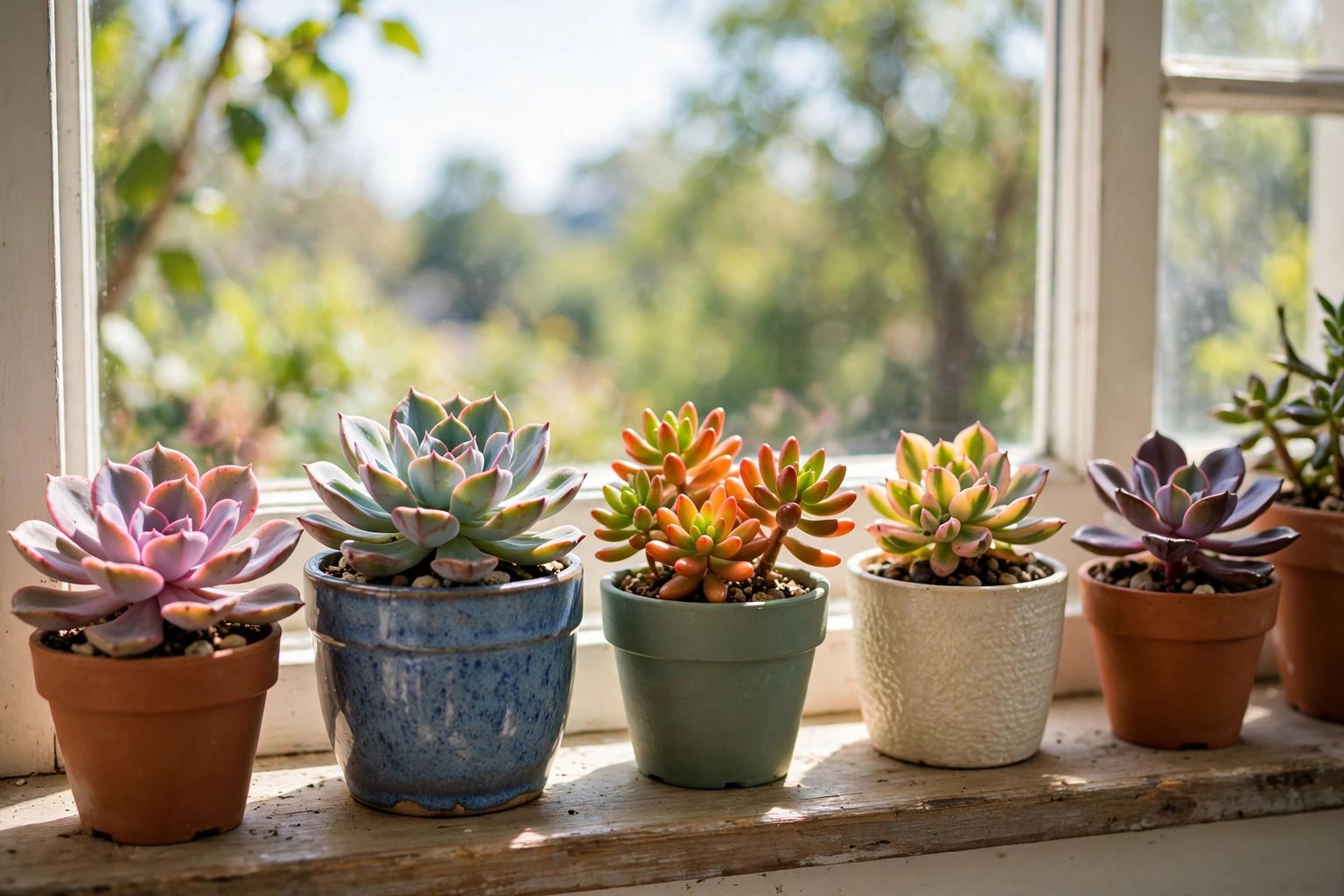
Succulents are famous for being easy, but most die from kindness — too much water and too little light. Treat succulents like desert plants, not houseplants: drench rarely, drain always, and give them real sun.
Watering: Soak and Dry
Water deeply until it flows from the drainage hole, then wait until the soil is bone-dry before watering again. The "soak and dry" method is the entire secret of succulent watering — schedules kill, dryness saves. In winter, many succulents need water only monthly.
Light: More Than You Think
Most succulents want 4–6 hours of bright light daily; without it they stretch tall and pale (etiolation). A sunny south- or west-facing window is the minimum — a grow light fixes stretching fast. Introduce direct sun gradually to avoid scorching new leaves.
Soil and Pots Matter
Use fast-draining cactus or succulent mix, and always choose pots with drainage holes. A drainage hole matters more than the perfect soil — water must escape. Terra cotta pots wick moisture away, making them ideal for chronic overwaterers.
Signs of Trouble
Yellow, translucent, mushy leaves mean overwatering; wrinkled, deflated leaves mean thirst. Mushy leaves are an emergency — unpot, dry the roots, and repot in fresh soil immediately. Mealybugs hide in leaf joints; dab them with rubbing alcohol.
Propagation: Free Plants Forever
Many succulents grow new plants from a single leaf: twist it off cleanly, let it callus for 2–3 days, then lay it on dry soil. Let the leaf callus before it touches soil — this one step prevents most propagation rot. Roots and a baby rosette appear in 2–4 weeks.
Seasonal Care Rhythm
Succulents grow actively in spring and fall, rest in summer heat and winter cold. Feed lightly only during active growth — dormant succulents cannot use fertilizer. Bring frost-tender types indoors before temperatures drop near freezing.