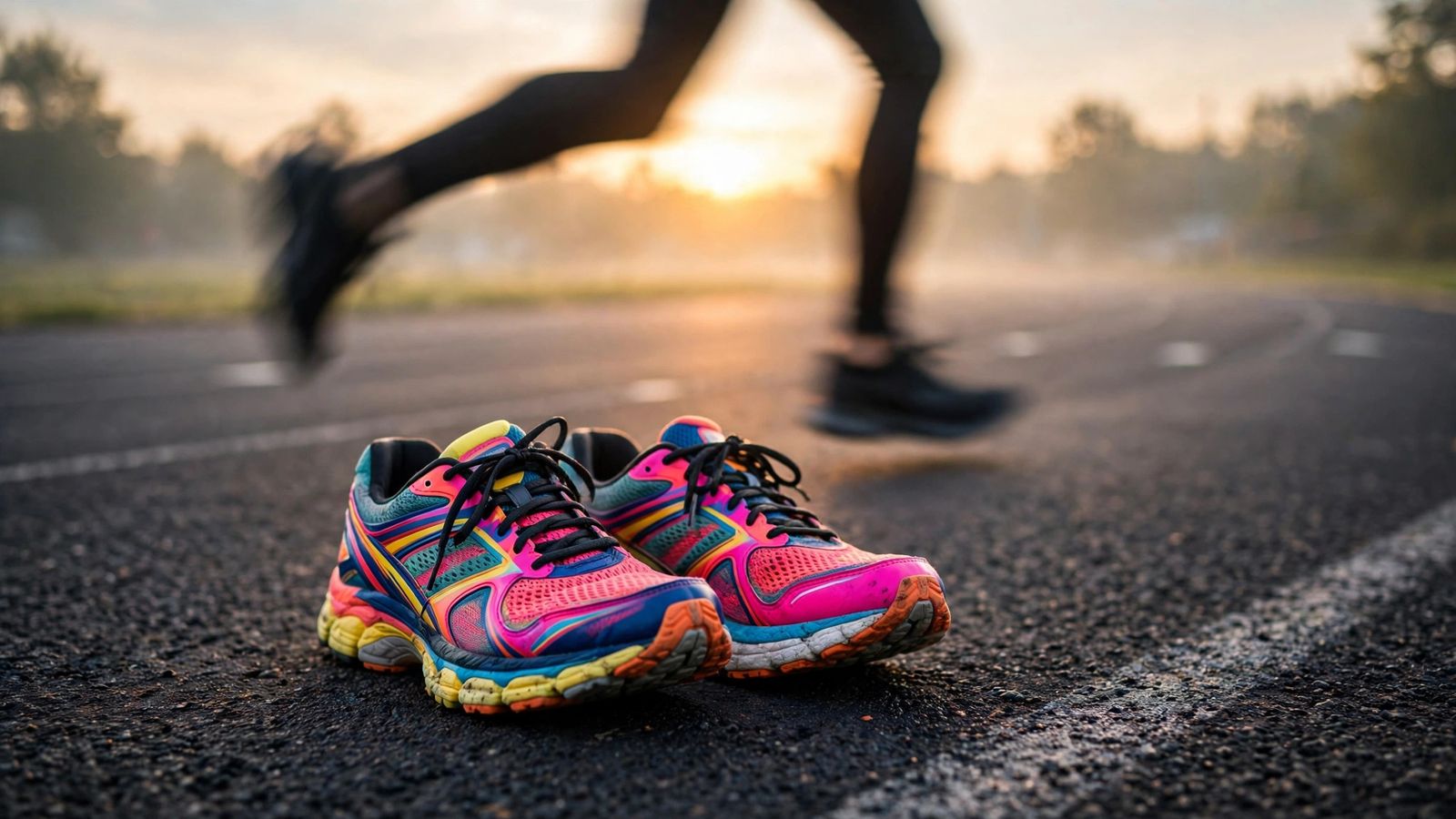
The wrong shoes turn every run into punishment — shin pain, blisters, and knees that file complaints. The right pair disappears on your feet and makes you want to go again tomorrow. Comfort beats every marketing claim; if they're not comfortable in the store, they won't be on mile three.
Fit Comes First
Shop in the afternoon when feet are slightly swollen, and leave a thumb's width of space in front of your longest toe — feet expand while running. Wear your actual running socks. The heel should feel locked with no slipping, and nothing should pinch or rub in a short jog around the store. Buy the fit, not the size number — your running size is often half a size up.
Cushioning: More Isn't Always Better
Beginners generally do well with moderate cushioning — it forgives heavy landings while keeping you stable. Maximal marshmallow soles feel amazing at first but can feel wobbly and disconnect you from the ground. Minimal shoes demand excellent form and aren't beginner-friendly. Start with a daily trainer in the middle of the cushioning spectrum.
Understanding Heel Drop
Heel drop is how much higher the heel sits than the forefoot — most beginner shoes sit at 8–12mm, which eases calf and Achilles strain. Lower drops (4–6mm) suit forefoot runners but need gradual adaptation. Don't obsess over the number; comfort and lack of pain matter far more. An 8–10mm drop is the safe default for new runners.
When to Replace Them
Running shoes last roughly 300–500 miles — for a 15-mile-a-week beginner, that's 5–8 months. Worn tread, creased midsole foam, or new aches in shins or knees are replacement signals. Rotate two pairs if you can; foam recovers between runs and lasts longer. Log your miles in a free app so you replace shoes on schedule, not on pain.