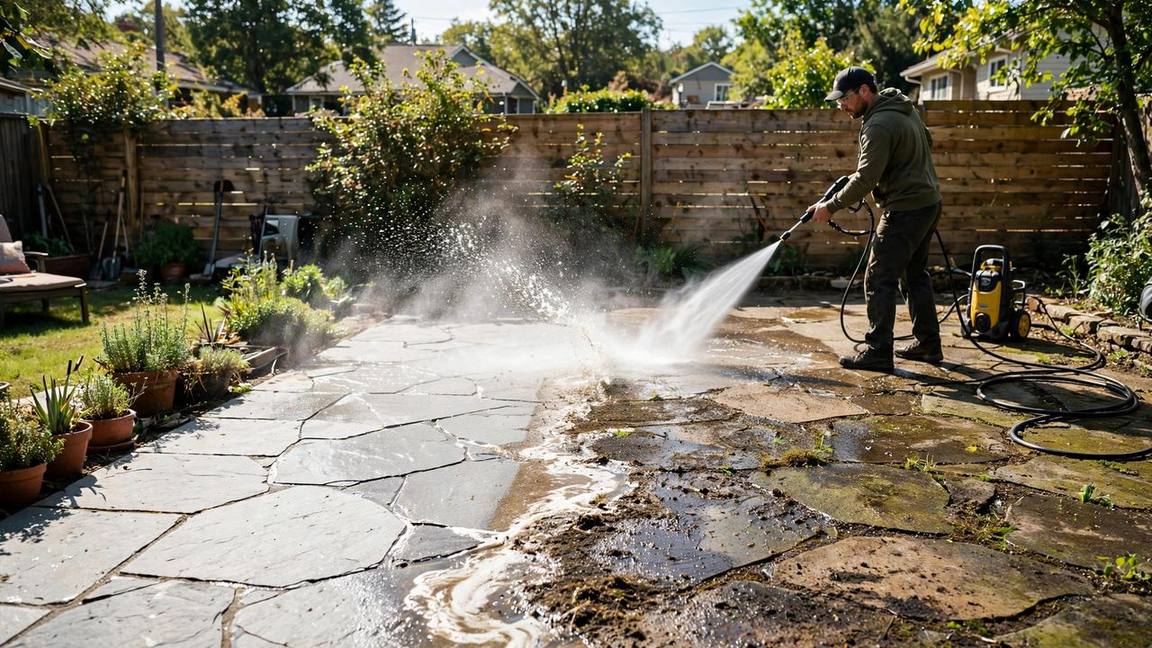
A pressure washer turns hours of scrubbing into minutes of satisfying blasting — driveways, decks, cars, and siding all come back to life. But buy the wrong machine and you'll either underpower through grime or strip paint and gouge wood. In 2026, electric models have closed the gap on gas for most homeowners, and smart features like pressure dials and onboard detergent tanks are standard. This guide explains PSI, GPM, nozzles, and the pro techniques that get surfaces truly clean without damage.
PSI vs GPM: What the Numbers Mean
PSI (pounds per square inch) measures cleaning force — how hard the water hits. GPM (gallons per minute) measures flow — how much water rinses dirt away. Pros multiply them into "cleaning units" (PSI × GPM). For cars and patio furniture, 1,300–1,900 PSI is plenty. Driveways and decks need 2,000–2,800 PSI, and heavy equipment calls for 3,000+ PSI. Higher GPM rinses faster, so a 2,000 PSI / 1.6 GPM machine often out-cleans a 2,800 PSI / 1.1 GPM one. Don't chase PSI alone.
Electric vs Gas: Picking Your Power
Electric pressure washers are quiet, light, maintenance-free, and plug into any outlet — ideal for most homeowners and perfect for cars, decks, and siding. They top out around 2,000–2,300 PSI. Gas models deliver 2,800–4,200 PSI with higher flow, making them the choice for large driveways, farm equipment, and professional use — but they're loud, heavy, need fuel and oil maintenance, and can't be used indoors. In 2026, battery-powered washers have improved for quick rinse jobs, but they can't replace a corded electric for deep cleaning.
Nozzles: The Color Code That Matters
Nozzles control spray angle, and the color system is universal: red (0°) is a laser-like jet for the toughest spots only — it can cut skin and damage surfaces; yellow (15°) strips paint and heavy grime; green (25°) is the all-rounder for driveways and siding; white (40°) is gentle enough for cars and windows; black (65°) is the soap nozzle for applying detergent. Start with the widest nozzle that works and only narrow down if needed. Turbo/rotary nozzles spin the 0° jet for aggressive cleaning with less risk.
Pro Cleaning Tips That Prevent Damage
Technique beats raw power. Keep the wand 6–12 inches from the surface and move in smooth, overlapping sweeps — never hold the jet in one spot or you'll etch concrete or strip wood fibers. Pre-soak with detergent using the black nozzle, let it dwell 5–10 minutes (don't let it dry), then rinse top-to-bottom. Wear safety glasses and closed shoes; the spray can inject water under skin. Test an inconspicuous spot first on wood, and never spray directly at window seals, electrical fixtures, or people and pets.
The right pressure washer matches your dirtiest job, not the biggest number on the box. For most homes, a quality electric unit around 2,000 PSI with a full nozzle set and an onboard detergent tank handles everything. Learn the nozzle colors, respect the spray distance, and you'll clean like a pro — fast, safe, and streak-free.