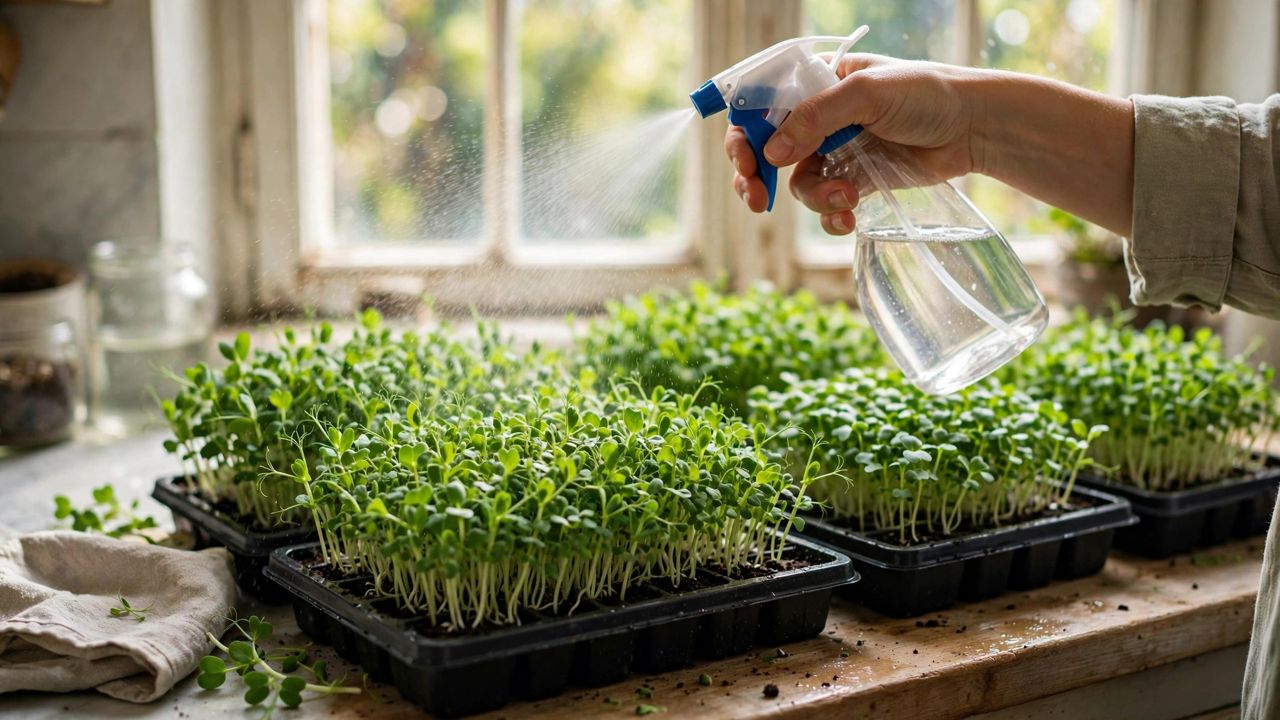
Microgreens — the tiny, nutrient-packed seedlings restaurants charge a fortune for — grow on your windowsill in 7–10 days for pennies. No garden, no experience, no patience required. This is the easiest win in home growing.
The $20 Starter Kit
You need: shallow trays with drainage (takeout containers with holes punched work), a bag of seed-starting mix or coco coir, a spray bottle, and seeds. Start with radish, broccoli, or sunflower — they're fast, forgiving, and delicious. Buy seeds labeled for microgreens or sprouting; they're tested for germination.
Sowing, Step by Step
Fill the tray with 1–2 inches of moist (not soggy) growing medium and press it flat. Scatter seeds densely and evenly — crowding is good here, unlike regular gardening. Mist them, cover the tray with another tray or lid for 2–3 days (darkness triggers strong sprouting), and check moisture daily.
Light and Watering
Once sprouts appear, give them light: a sunny windowsill or a cheap LED shop light 2–4 inches above the tray, 12–16 hours a day. Rotate the tray daily so growth stays even. Water from the bottom (set the tray in a shallow dish) to prevent mold — the #1 microgreen killer. Good airflow from a nearby fan also keeps mold away, and never let the tray sit in standing water for hours.
Harvest and Repeat
Harvest when the first true leaves appear, usually day 7–10: snip with scissors just above the soil line. Rinse, and they're ready — on sandwiches, salads, eggs, everything. Start a new tray every week and you'll have a continuous supply. One tray of radish microgreens costs about $0.50 in seeds versus $5 at the store.
Ten days from seed to salad. Once you taste homegrown sunflower shoots, the grocery store's sad plastic clamshells will never tempt you again.