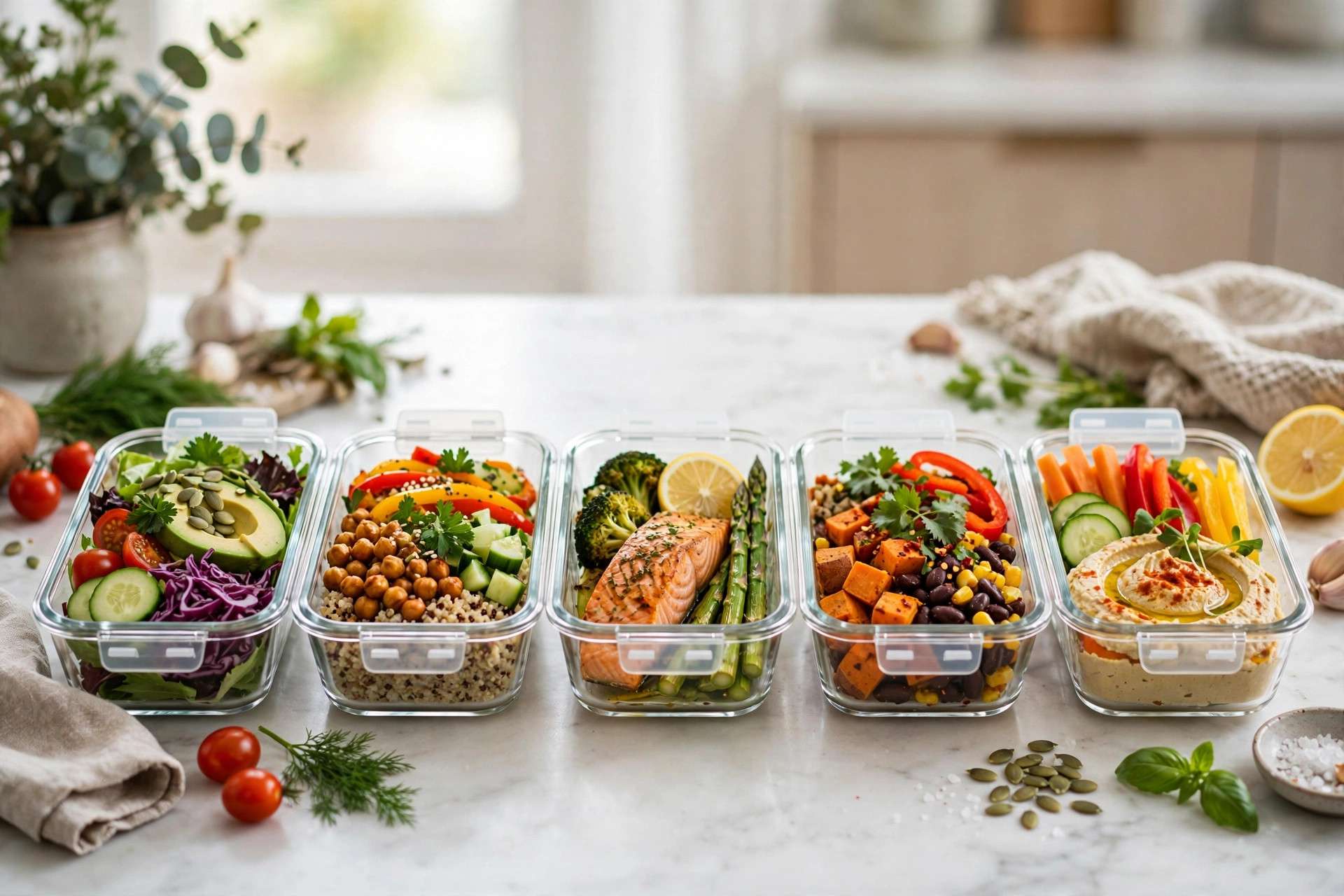
Eating healthy does not need an expensive grocery bill — with one weekly prep session you can eat well for less, waste almost nothing, and never stare blankly into the fridge at 8pm again.
Plan Once, Shop Once
A 15-minute plan saves more money than any coupon. Pick 3–4 dinners you will actually repeat (variety is the enemy of budget prep), check what is already in your pantry, and write a short list — then stick to it. Shopping hungry or without a list is how impulse buys quietly double your bill. Aim for one grocery trip per week; every extra trip adds unplanned spending.
Cheap Healthy Staples
Build meals around ingredients that are cheap and filling: rice, oats, lentils, chickpeas, beans, eggs, frozen vegetables, potatoes, bananas, and peanut butter. Frozen produce is as nutritious as fresh and never spoils in the drawer. Buy whole chicken or large family packs and portion them yourself. Seasonal fruit and vegetables cost a fraction of out-of-season imports — let the season design your menu.
Batch Cooking Basics
Dedicate one 2-hour session per week to cooking in bulk. Make a big grain base (rice or quinoa), one protein (baked chicken, lentils, or beans), and roasted mixed vegetables — these mix-and-match into different meals all week. Cook components, not finished meals, so day-four lunch does not feel like a rerun. A slow cooker or pressure cooker turns cheap cuts of meat and dried beans into tender, flavorful staples with zero effort.
Storage That Keeps Food Safe
Invest in airtight glass containers — they pay for themselves by keeping food fresh longer. Cool food within 2 hours of cooking and refrigerate immediately. Label everything with the date; most cooked meals stay good for 3–4 days in the fridge. Freeze extras flat in bags for up to 3 months. When in doubt, throw it out — no savings are worth food poisoning.
Smart start: this week, prep just lunches — one grain, one protein, two vegetables. Master that rhythm, then expand. Your wallet and your weeknights will thank you.