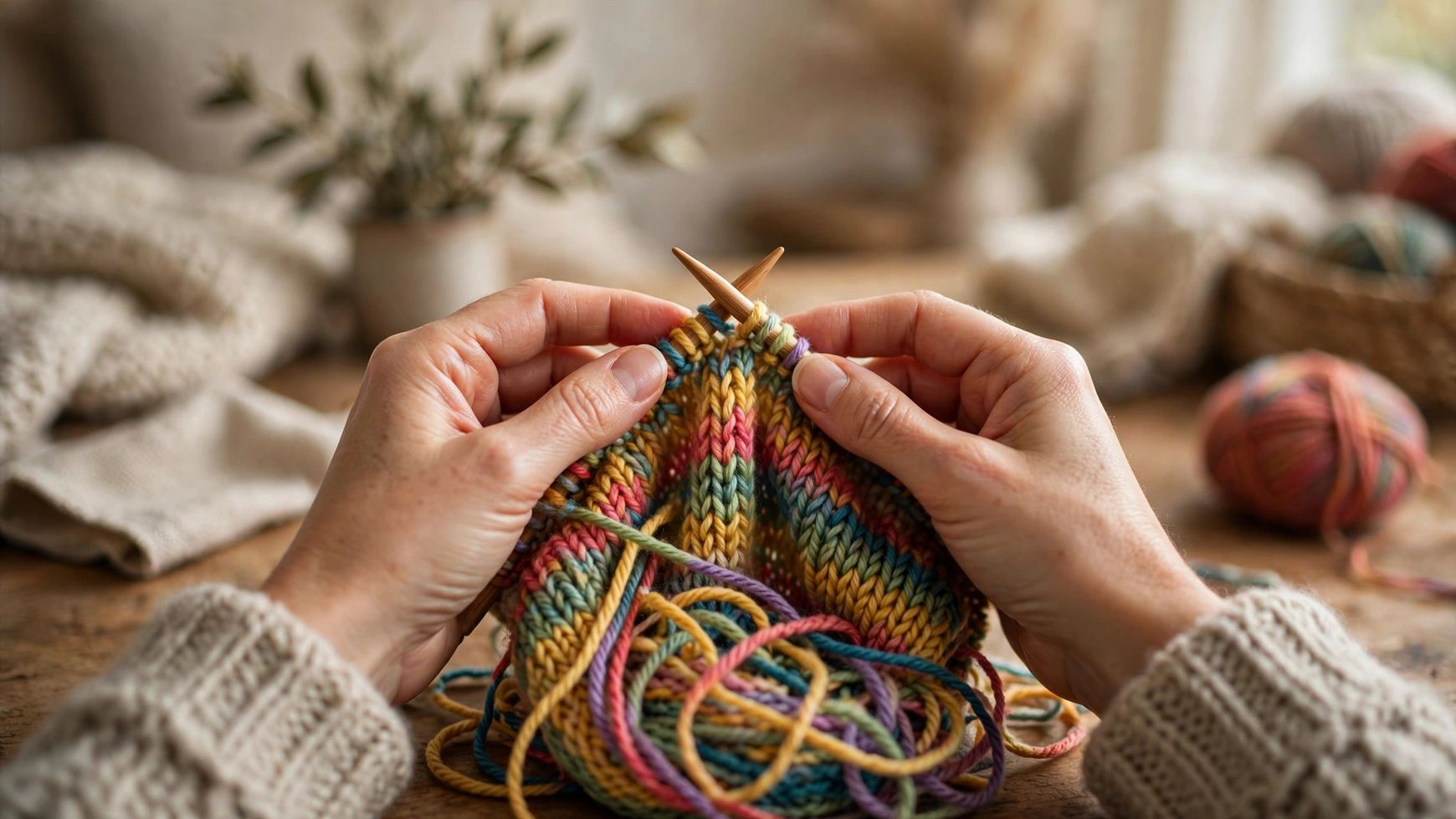
Knitting is a calming, creative skill — and every knitted fabric is built from just two stitches. Master the knit and purl stitches first; everything else in knitting is a combination of these two.
Tools: Needles and Notions
Start with medium-size needles (US 8 / 5mm) and smooth, light-colored worsted-weight yarn so stitches are easy to see. Bamboo or wooden needles grip yarn slightly, preventing the slippery-stitch frustration beginners get with metal. Add scissors, a tapestry needle, and stitch markers.
Choosing Beginner Yarn
Worsted-weight acrylic or wool in a light, solid color shows your stitches clearly. Avoid dark, fuzzy, or novelty yarns at first — you cannot fix mistakes you cannot see. One skein is plenty for practice swatches and a first scarf.
Casting On and the Knit Stitch
Cast on 20 stitches with a long-tail cast-on, then practice the knit stitch: in through the front, wrap, pull through, slide off. Keep your tension relaxed — strangling the needles is the classic beginner error and makes every stitch a fight. Knit every row for simple garter stitch.
The Purl Stitch and Stockinette
Purl is the mirror of knit — yarn in front, needle through the back. Alternating knit and purl rows creates stockinette, the smooth "V" fabric of most sweaters. Practice ribbing (knit 2, purl 2) next; it is the stretchy edge of hats and cuffs.
Fixing Mistakes Without Panic
Dropped stitches can be hooked back up with a crochet hook; small holes can be sewn closed later. Learn to "tink" (knit backwards) — unknitting one stitch at a time fixes most errors without ripping out rows. Place a lifeline of thread through a good row before tricky sections.
First Projects That Build Skills
A garter-stitch scarf teaches consistency; a dishcloth teaches pattern reading; a simple hat teaches decreasing in the round. Finish small projects before big ones — completed dishcloths build more skill than an abandoned sweater. Celebrate every finished piece, flaws included.