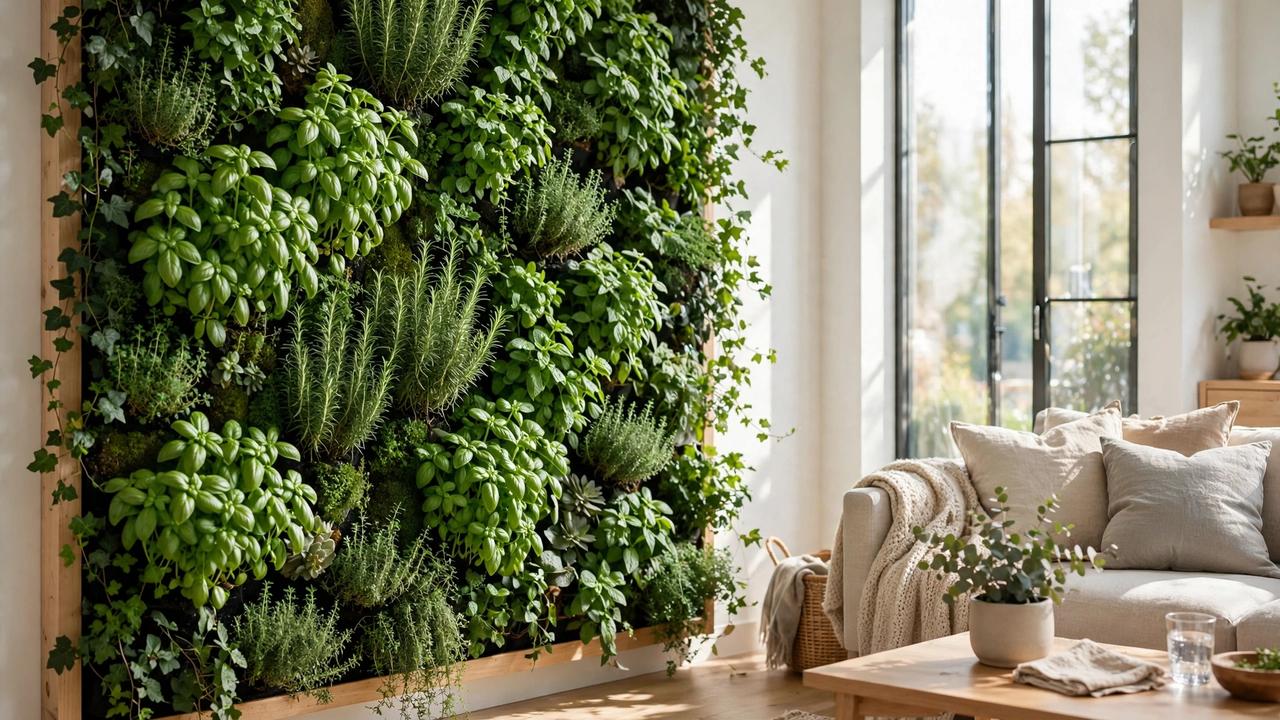
A vertical garden turns a blank wall into a living piece of art — no floor space needed, which makes it perfect for apartments, small offices and rented homes. With the right setup, even a dark apartment can host a thriving wall of green that improves air quality and mood. Here is how to build one that actually survives past the first month.
Choose Your System
Beginners do best with pocket planters or modular panels that hang directly on the wall — cheap, forgiving, and easy to rearrange. Felt pockets need hand watering; self-watering panels with a reservoir tank are worth the upgrade if you travel or forget to water.
Light Is the Deciding Factor
Most indoor walls do not get enough natural light for healthy growth. Full-spectrum LED grow lights on a simple timer (12–14 hours daily) solve this completely. Mount them 20–30 cm from the plants and your garden will thrive reliably even in a windowless room.
Best Plants for Vertical Walls
Pick forgiving trailing and compact plants: pothos, philodendron, spider plant and ferns are nearly indestructible and cascade beautifully. Herbs like basil and mint work near a kitchen with good light and give you fresh flavor inches from the stove. Avoid large, heavy plants that pull pockets loose.
Watering and Feeding
Vertical systems dry out faster than pots. Check moisture twice a week — drip-irrigation kits on a timer remove the guesswork entirely. Feed with diluted liquid fertilizer every two weeks in the growing season to keep growth steady; flushing the system monthly prevents salt buildup.
Common Mistakes to Avoid
Do not mix plants with very different water needs in one section, do not let the wall sit in direct harsh afternoon sun without some protection, and always install a waterproof backing behind the system — your drywall will thank you.