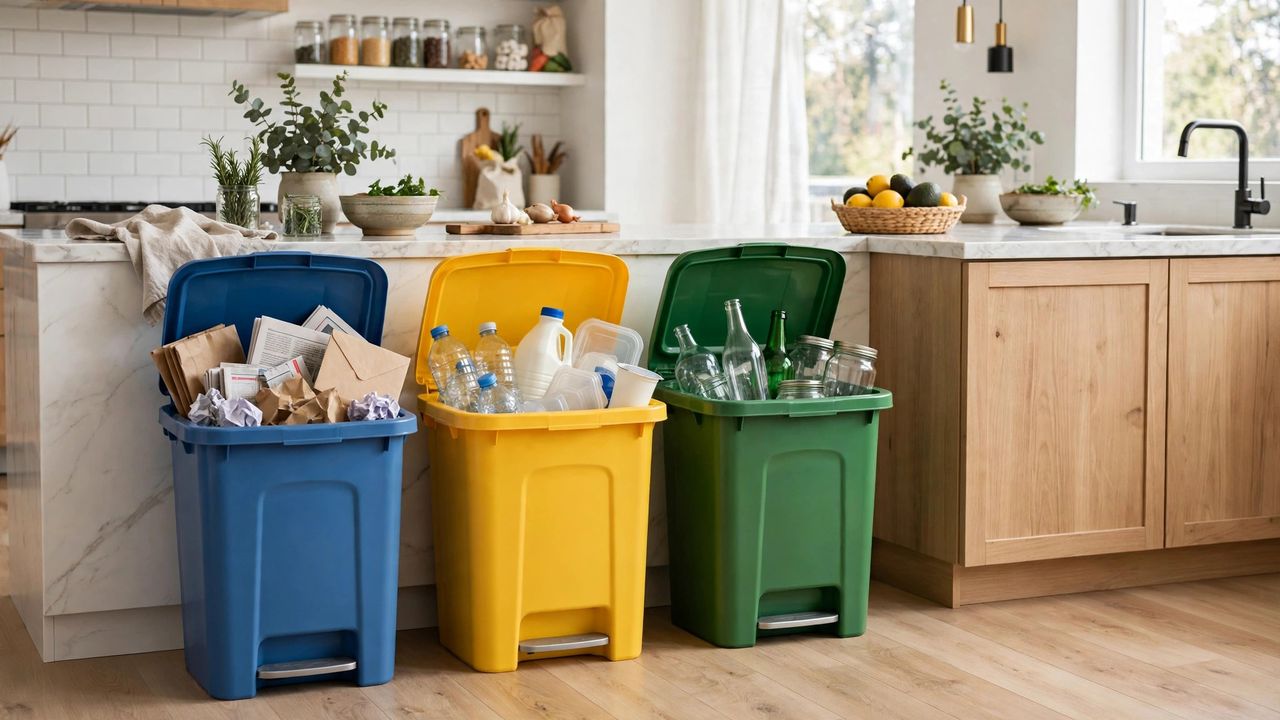
Recycling only works when the right things land in the right bin. One greasy pizza box can contaminate a whole truckload. This 2026 home guide clears up the confusion so your efforts actually count.
What Usually Goes in the Recycling Bin
- Paper & cardboard: newspapers, magazines, office paper, clean cardboard boxes (flatten them).
- Plastic bottles & jugs: rinse quickly; caps on is fine in most programs.
- Metal cans: aluminum and steel food cans, rinsed.
- Glass bottles & jars: where your program accepts glass — not all do.
Common Mistakes (Wish-Cycling)
- Plastic bags & wrappers: they jam sorting machines — return bags to store drop-off bins instead.
- Greasy or food-soiled paper: it belongs in compost or trash, not recycling.
- Coffee cups: the plastic lining makes most non-recyclable.
- Electronics & batteries: never in the bin — use e-waste drop-offs (batteries cause fires).
- Styrofoam: rarely accepted curbside anywhere.
Reuse Before You Recycle
Jars become storage containers, old t-shirts become cleaning rags, and cardboard boxes get a second life for shipping or moving. Repair what breaks before replacing it — a glued chair beats a new one in the landfill.
Cut Waste at the Source
- Carry a reusable bottle, bag, and coffee cup — the big three of daily waste.
- Buy in bulk to reduce packaging; choose refillable products where available.
- Compost food scraps if your city offers it — food is the heaviest part of trash.
- Check your local program's rules yearly; accepted materials change.
When in doubt, look it up rather than guessing — a quick check beats a contaminated bin. Reduce first, reuse second, recycle third.