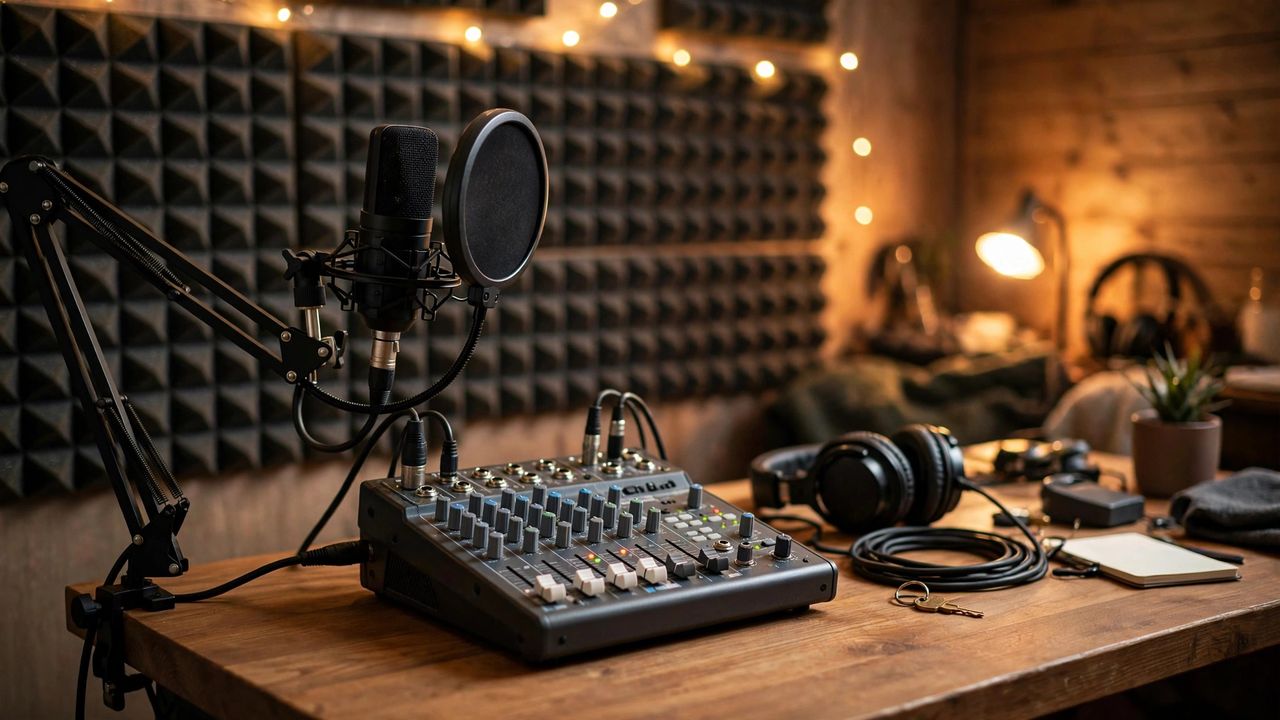
You don't need a record label's budget to sound like a pro. With a few smart purchases and some free software, you can build a home recording studio that captures broadcast-quality audio for podcasts, music, or voiceovers.
The Only 4 Pieces of Gear You Need
Start with a USB condenser or dynamic microphone ($70–$150) — it plugs straight into your computer, no extra gear required. Add closed-back headphones to hear yourself without bleed, a pop filter to tame harsh plosives, and a sturdy mic stand. That's it. Upgrade to an audio interface and XLR mic later, only when your ears tell you it's time.
Tame Your Room for (Almost) Free
Your room shapes your sound more than your mic does. Record in the smallest, softest room you have — closets full of clothes work surprisingly well. Hang thick blankets or moving blankets on bare walls to kill echo, and keep the mic away from windows and humming appliances. These free fixes outperform expensive gear in a bad room.
Free Software That Professionals Use
You don't need to pay for a DAW. Audacity handles recording and basic editing free, GarageBand comes free on Mac, and Cakewalk offers a full professional studio free on Windows. Learn gain staging (record loud enough to beat noise, quiet enough to never clip) and you'll sound better than most paid setups.
Recording Habits That Cost Nothing
Warm up your voice, record 6–8 inches from the mic, and always capture a few seconds of room silence for noise removal. Do three full takes of everything — the third is usually the keeper. Save often, label tracks clearly, and back up every session.
Great recordings come from good rooms, good technique, and practice — not expensive gear. Start with the basics, master them, and upgrade only when you've outgrown what you have. Your future listeners will thank you.