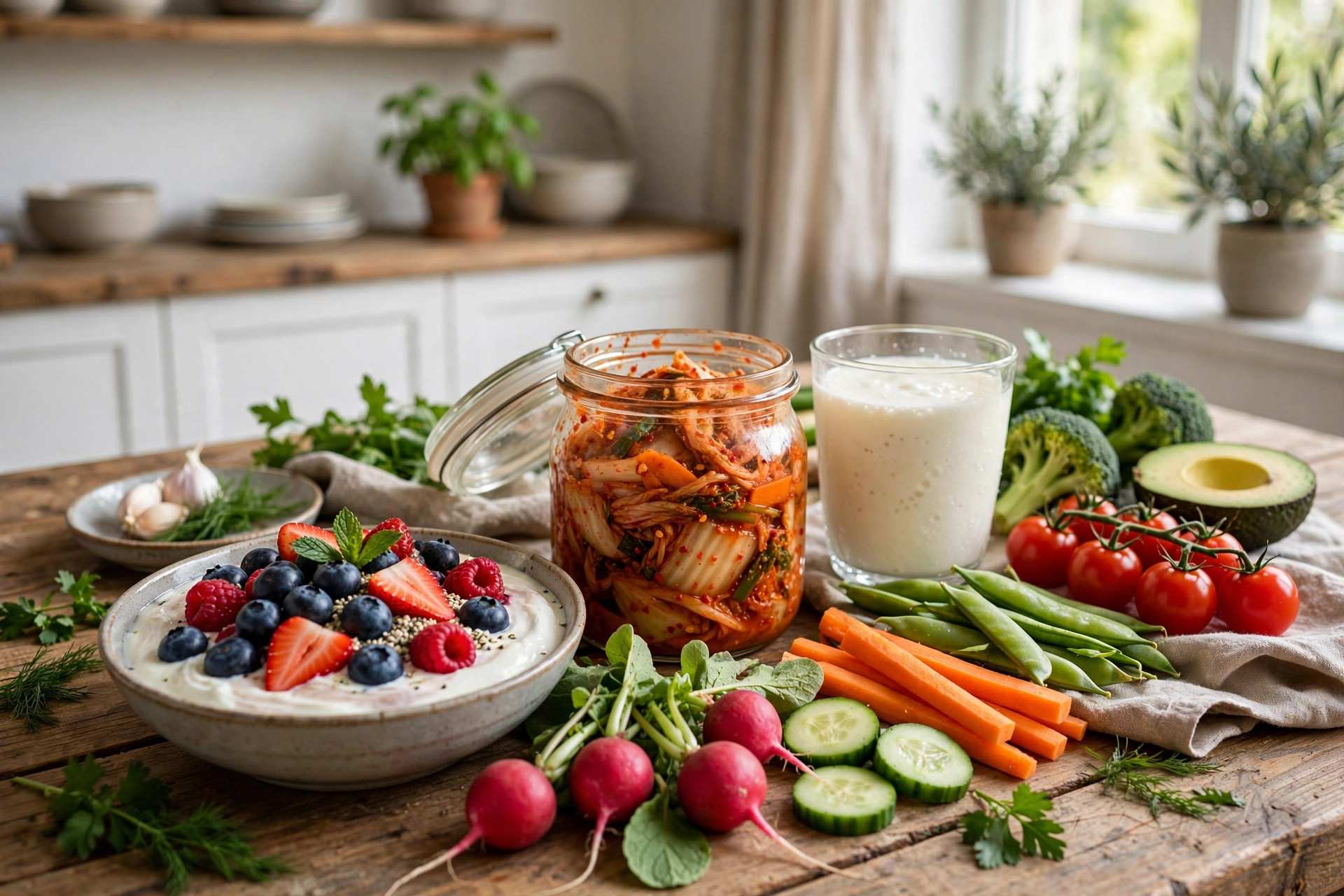
Scientists now call the gut the body's "second brain" — trillions of microbes there influence digestion, immunity, and even mood. The good news: your microbiome responds to daily habits, and small changes can make a big difference in weeks. This guide covers what actually works.
1. Eat 30 Different Plants a Week
Research shows people who eat 30+ types of plants per week have far more diverse, healthier gut microbes. That includes vegetables, fruits, legumes, nuts, seeds, herbs, and whole grains. Diversity matters more than quantity — so rotate your foods instead of eating the same salad daily. Count each type once; coffee and dark chocolate count too.
2. Add Fermented Foods Daily
Yogurt, kefir, kimchi, sauerkraut, miso, and kombucha deliver live beneficial bacteria directly to your gut. Studies show regular intake raises microbial diversity and calms inflammation. Start with small portions — a few spoonfuls daily — to let your gut adjust without bloating. Choose products labeled "live cultures" with no added sugar.
3. Feed Your Microbes Fiber
Fiber is the favorite food of good gut bacteria, which ferment it into short-chain fatty acids that protect your colon lining. Oats, beans, lentils, berries, and vegetables are excellent sources. Increase fiber gradually and drink plenty of water — jumping from low to high fiber overnight causes gas and discomfort.
4. Cut Back on Gut Disruptors
Ultra-processed foods, artificial sweeteners, excess alcohol, and unnecessary antibiotics can harm beneficial microbes. You do not need to be perfect — just reduce the biggest offenders, especially sugary drinks and packaged snacks full of emulsifiers. Read ingredient lists; simpler is better.
5. Sleep and Stress Matter Too
The gut-brain axis runs both ways: poor sleep and chronic stress disrupt microbial balance, and an unhappy gut worsens anxiety. Aim for 7–9 hours of sleep and add a daily stress ritual — a walk, deep breathing, or short meditation. A calm nervous system is one of the most underrated gut-health tools there is.
6. Be Skeptical of Quick Fixes
Most generic probiotic pills have weak evidence, and expensive gut tests rarely give actionable advice. Consistent food and lifestyle habits outperform any supplement — spend your money on quality groceries, not miracle bottles. If digestive problems persist, see a doctor rather than self-treating.