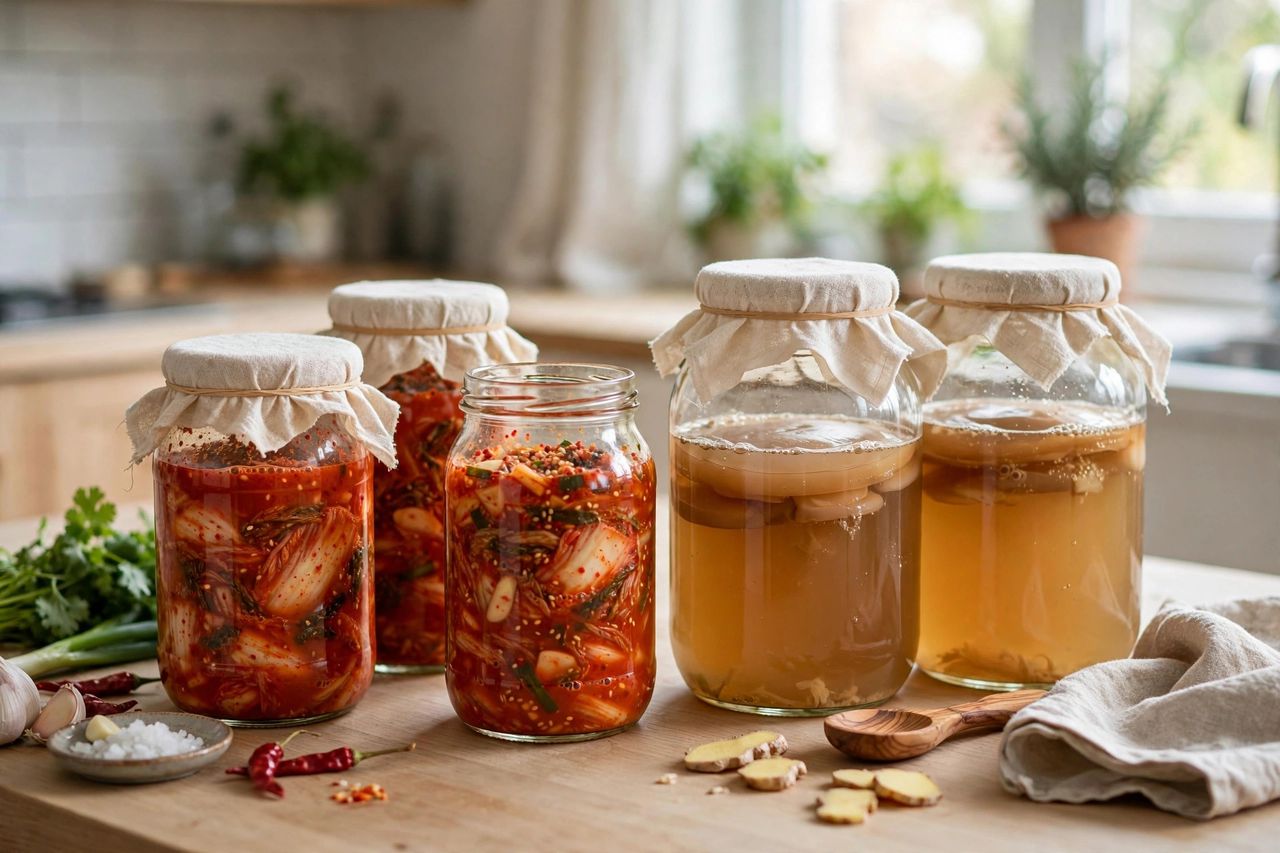
Fermentation is the oldest food-preservation trick in the book — and one of the healthiest. Turning cabbage into kimchi or milk into yogurt takes nothing more than salt, time, and a jar. Here's how to start fermenting at home with confidence.
Why Ferment? The Gut-Health Connection
Fermented foods are rich in live probiotic bacteria that support digestion and immunity. Unlike store-bought versions (often pasteurized, which kills the good bugs), homemade ferments are alive and fully customizable — control the salt, spice, and sourness exactly how you like it.
The Easiest Ferments for Beginners
Start with sauerkraut — shredded cabbage plus 2% salt by weight, packed tight in a jar, ready in 1–3 weeks. Milk kefir and yogurt come next: both need only warm milk and a starter culture. Once comfortable, try kimchi, pickles, or kombucha. Master one ferment before adding more; each has its own rhythm.
Food Safety: Mold vs. Kahm Yeast
Safety is mostly common sense: keep vegetables submerged under brine (oxygen is what invites mold), use clean jars, and trust your nose. White, flat kahm yeast is harmless — just skim it off. But fuzzy green, black, or pink mold means toss the batch. When in doubt, throw it out; cabbage is cheap, your stomach isn't.
The Gear You Actually Need
Skip the fancy kits at first. All you need is a wide-mouth mason jar, sea salt (no iodine), and a weight to hold food under the brine — a smaller jar filled with water works fine. A kitchen scale helps nail the 2% salt ratio, the single most important number in vegetable fermentation.
Fermentation rewards patience, not perfection. Salt it right, keep it submerged, taste as you go — and within weeks you'll be eating food you made with your own hands that tastes better than anything off a shelf. What will you ferment first?