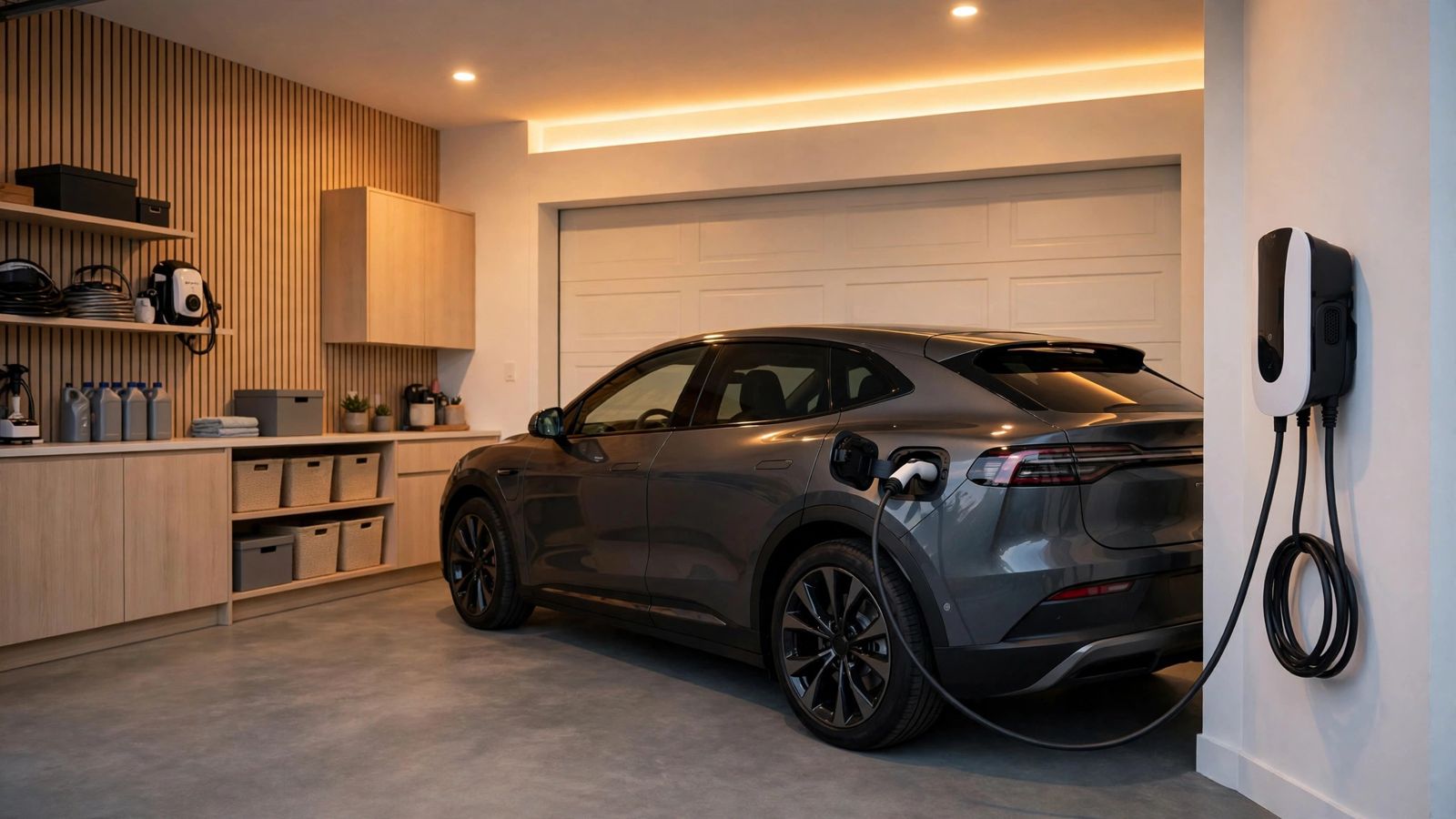
Home charging is the secret superpower of EV ownership — wake up to a "full tank" every morning at a fraction of public charging prices. Here is the beginner-friendly breakdown of what you actually need.
Level 1 vs Level 2: The Core Choice
Level 1 uses a regular wall outlet (120V) and adds roughly 5–8 km of range per hour — enough if you drive under 50 km a day and charge overnight. Level 2 uses a 240V circuit (like a dryer outlet) and adds 30–50 km per hour, fully charging most EVs overnight. Most owners end up wanting Level 2; Level 1 works as a stopgap, not a long-term plan.
Installation: Costs and Requirements
A Level 2 setup needs a dedicated 40–60 amp circuit installed by a licensed electrician — do not improvise this. Typical total cost: $500–$1,500 including the charger hardware, though long wire runs or panel upgrades push it higher. Get 2–3 quotes and check for utility rebates and tax credits in your area — many regions subsidize home charger installation. Renters: ask your landlord about shared or outdoor-rated installations before buying the car.
Charger Features Worth Having
A smart charger with scheduling lets you charge during cheap off-peak hours — this alone can halve your charging costs. Look for Wi-Fi connectivity and energy monitoring so you can see exactly what driving costs you. Weatherproofing (NEMA 4/IP66) matters for outdoor installs. Cable length is underrated: measure your parking spot — a 7.5m cable saves daily frustration a short one causes.
Beginner Mistakes to Avoid
Do not charge to 100% daily unless your car uses LFP batteries — 80–90% daily is healthier for most battery chemistries and covers real needs. Do not use a cheap extension cord with portable chargers; undersized cords overheat. Do not skip the electrician — DIY wiring voids insurance and risks fire. And do not assume public charging is cheaper; fast chargers can cost 2–3× your home rate.
Smart start: budget for Level 2 from day one, schedule charging for off-peak hours, and cap daily charging at 80–90%. Do that and home EV ownership becomes cheaper, easier, and calmer than any gas station routine.