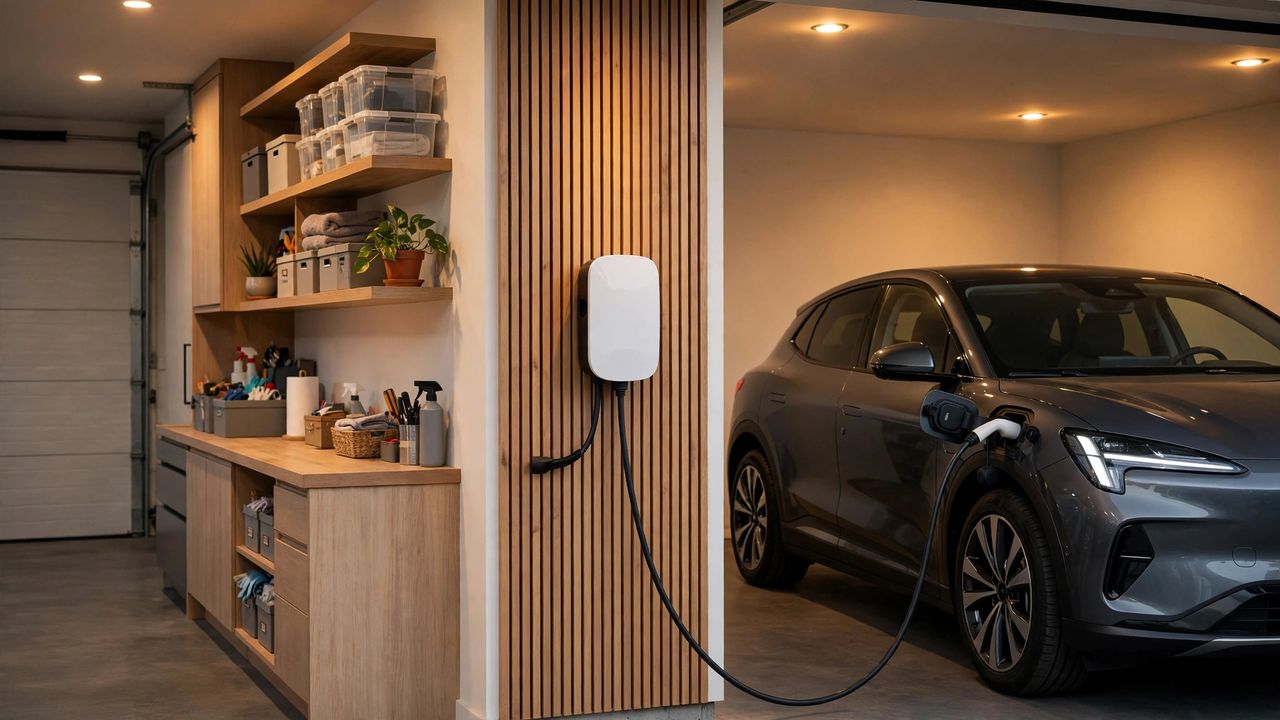
Charging your electric car at home is cheaper, faster, and far more convenient than relying on public stations. For most EV owners, a home charger pays for itself within the first year. Here is how to set one up the right way.
Level 1 vs. Level 2: Pick the Right Speed
Every EV ships with a Level 1 cable that plugs into a regular wall outlet, adding about 4–5 miles of range per hour — fine for occasional top-ups. A dedicated Level 2 charger delivers 25–40 miles per hour and is the real game-changer for daily drivers. If you commute more than 30 miles a day, Level 2 is almost always worth it.
Check Your Electrical Panel First
A Level 2 charger needs a 240-volt circuit, usually 40 to 60 amps. Before buying anything, have an electrician check whether your panel has spare capacity. Many homes need a panel upgrade, which can cost as much as the charger itself — so get this assessment first. Most installers offer a free site survey.
Smart Chargers Save You Real Money
Look for a charger with Wi-Fi scheduling so it runs during off-peak hours when electricity is cheapest. Many utility companies offer special EV rates and rebates that can cut your charging bill in half. Check your energy provider's website before you buy — you might be leaving money on the table.
Installation Tips That Matter
Mount the charger as close to your parking spot as possible to keep the cable short and tidy. Choose a weatherproof unit if your car parks outdoors, and leave room for a longer cable than you think you need — your next EV might park in a different spot. A licensed electrician should handle the wiring; this is not a DIY project.
Start small if you are unsure: a quality smart Level 2 charger from a reputable brand, installed by a licensed electrician, will serve you for a decade. Many regions still offer tax credits and utility rebates in 2026, so claim them before they expire. Once you wake up every morning to a full battery, you will wonder why you ever waited in line at a public charger.