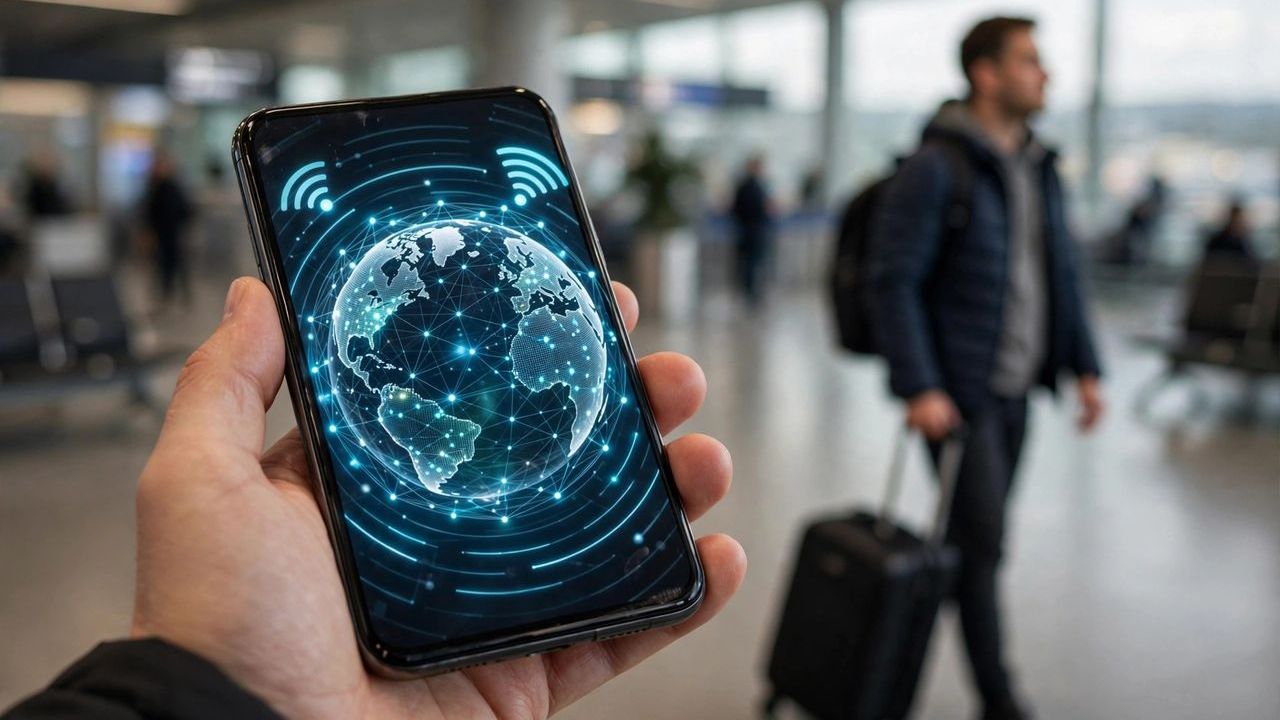
Remember landing in a new country and hunting for a SIM card shop while your phone showed "No Service"? An eSIM ends that ritual: it's a digital SIM built into your phone that you activate by scanning a QR code. No tiny plastic cards, no paperclips, no losing your home SIM in a hotel drawer. In 2026, eSIMs are the easiest way to stay connected abroad.
How eSIMs Work
An eSIM is a rewritable chip inside your phone that stores carrier profiles digitally. Instead of inserting a card, you buy a plan online and scan a QR code (or tap an install link) — the profile downloads in minutes. Your phone can store several eSIM profiles and switch between them, so your home number stays active while a travel eSIM handles data. Most phones made since 2020 support them, including iPhones, Pixels, and Samsung flagships.
Why Travelers Love Them
The biggest win is price: travel eSIM data often costs a fraction of carrier roaming, which can run $10+ per day. You can buy and install a plan before you even board the plane, landing with working data. Multi-country eSIMs cover whole regions (like all of Europe) on one plan. And because your home SIM stays in the phone, you keep receiving calls and texts on your real number — no missed bank codes or family calls.
Setting One Up: Step by Step
First, check your phone supports eSIM (Settings → Cellular/Mobile → Add eSIM). Then buy a plan from a provider like Airalo, Holafly, or Nomad — compare data amounts and validity days for your trip. Install it on Wi-Fi before you travel, label it clearly (e.g., "Spain trip"), and set it as the data line while keeping your home line for calls. Turn on data roaming for the eSIM only — that's normal and expected.
Things to Watch Out For
Most travel eSIMs are data-only, with no local phone number — fine for maps and WhatsApp, less so if you need to call local businesses. Check network coverage for your exact destinations, since rural areas vary. Some eSIMs can't be reinstalled if deleted, so don't remove the profile mid-trip. And if your phone is carrier-locked, eSIMs from other providers won't work — confirm it's unlocked first.
The bottom line: for most trips, an eSIM is cheaper, faster, and less hassle than any alternative. Buy a small plan, test it at home on Wi-Fi, and travel with one less thing to worry about. Once you've landed with instant data, you'll never go back to the SIM-shop scramble. It is a small step that makes every single trip noticeably smoother.