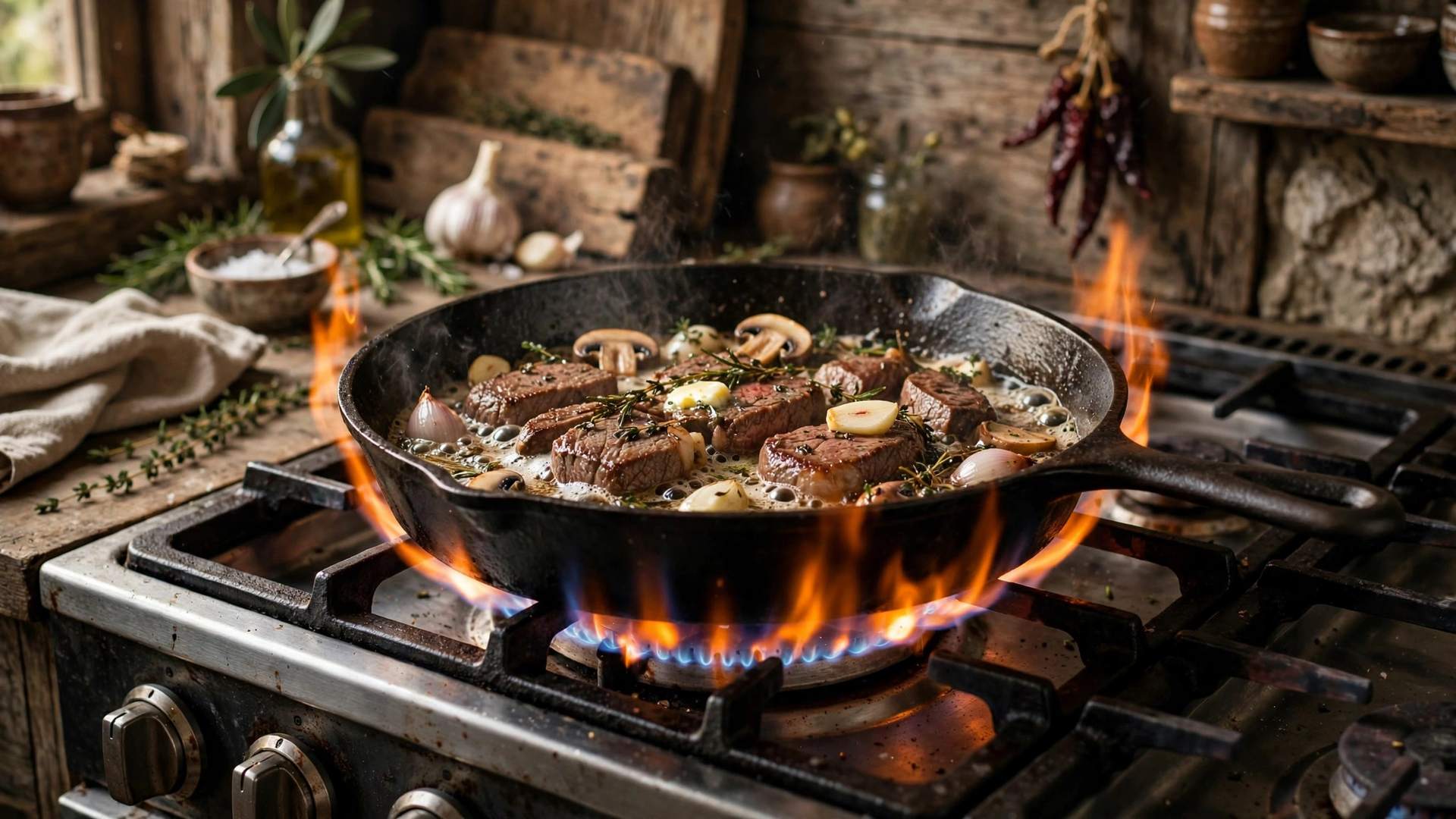
A cast iron skillet is the one pan that can genuinely last a lifetime — even be handed down to your kids. It sears steak like nothing else, goes from stovetop to oven to campfire, and gets more nonstick the more you use it. But it does demand a little know-how. Here's how to season, cook, and care for cast iron like a pro.
Seasoning: Building the Nonstick Layer
Seasoning is baked-on oil that polymerizes into a hard, protective coating. Most new skillets come pre-seasoned, but you can improve it: rub a very thin layer of high-smoke-point oil (grapeseed, canola, or flaxseed) all over the pan, wipe it until it looks almost dry — too much oil makes it sticky — then bake upside-down at 450–500°F (230–260°C) for an hour. Repeat 2–3 times. And here's the real secret: just cooking with it (especially fatty foods like bacon) builds seasoning better than any oven ritual.
Cooking: What Cast Iron Does Best
Cast iron excels at high-heat searing: steaks, smash burgers, cornbread, and crispy roast potatoes. Preheat the pan for 3–5 minutes before adding food — even heating is everything. Use enough fat, and don't crowd the pan. Avoid very acidic dishes (long-simmered tomato sauce) on brand-new seasoning — they can strip it. Once the seasoning is mature after months of use, even that becomes a non-issue.
Cleaning Without Ruining It
Forget the old "never use soap" myth — a little mild dish soap is fine on well-seasoned iron; it can't dissolve polymerized oil. Clean while the pan is still warm: hot water, a stiff brush or chain-mail scrubber, and no long soaking. The critical step: dry it completely — heat it on the stove for a minute until all water evaporates, then rub in a paper-thin layer of oil while warm. Store dry with a paper towel inside if stacking.
Rust Rescue: Saving a Neglected Pan
Found a rusty skillet at a flea market? It's almost always salvageable. Scrub rust off with steel wool or a vinegar soak (half water, half white vinegar, 1–3 hours — not longer), rinse, dry immediately, then re-season with 3–4 oven rounds. Deep pitting from years of neglect is cosmetic — the pan still cooks fine. Only cracks or warping (a pan that spins on a flat surface) mean it's truly done.
That's the whole craft: season thin, cook hot, clean warm, dry completely. Do that and your $30 skillet will outlive every nonstick pan you'll ever buy. Questions about a specific pan, rust spot, or sticky seasoning? Ask Nova AI's free chat anytime.