Bullet journaling is the rare productivity system that bends to your life instead of the other way around. Invented by Ryder Carroll, it turns an ordinary notebook into a planner, diary, and to-do list in one — and in 2026 it is more relevant than ever, because a paper system never pings you with notifications. Whether you want to get organized, track habits, or simply think more clearly, this guide walks you through the setup step by step.
Rapid Logging: Learn the Core Language
Everything in a bullet journal starts with rapid logging — a shorthand for capturing thoughts fast. Tasks are bullets (•), events are circles (○), and notes are dashes (—). When a task is done, cross it (×); when it is not finished, migrate it forward (>) or schedule it (<). Two extra marks make the system shine: * for priority and ! for inspiration. Spend one week using only these five symbols and the whole method will feel natural.
Set Up the Future, Monthly, and Daily Logs
Start your journal with three foundation pages. The future log spans the whole year — one spread where upcoming deadlines, birthdays, and goals live until their month arrives. The monthly log gives you a one-page calendar plus a task list for the current month. Finally, the daily log is where you actually work: date each entry, rapid-log as the day unfolds, and review it every evening. This three-layer structure keeps long-term plans visible without burying today's priorities.
Collections: Habit Trackers, Reading Lists, and More
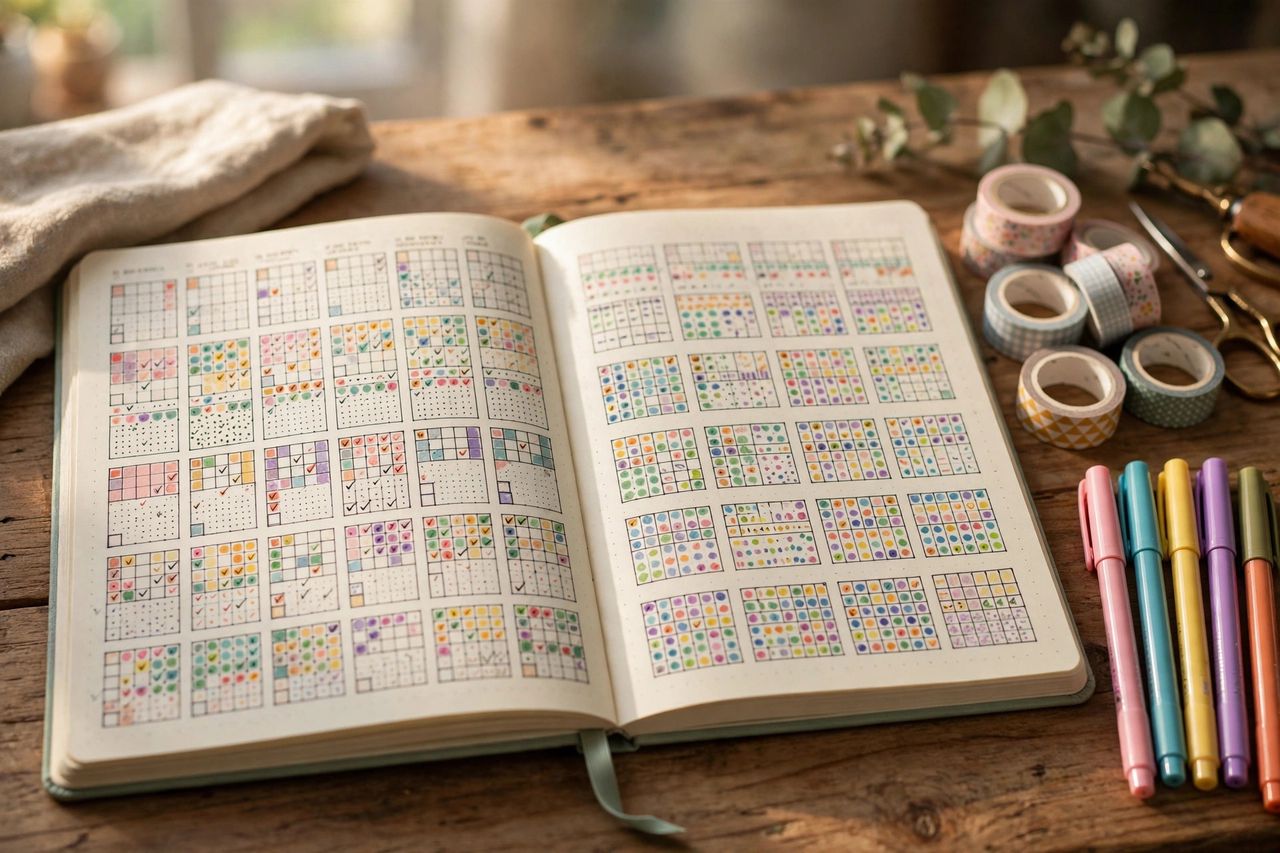
Collections are themed pages for anything you want to gather in one place. A habit tracker grid — one row per habit, one column per day — makes consistency visible at a glance. A reading list, a gratitude log, a savings tracker, or a meal plan are all classic collections. Rule of thumb: add a new collection only when you catch yourself rewriting the same list twice. Fewer collections you actually use beats twenty pretty ones you ignore.
Choose the Right Notebook and Pens
You do not need expensive gear. A sturdy A5 notebook with dot grid pages is the standard choice because dots guide handwriting without ruling it. Look for paper around 160gsm if you use markers or water-based pens, so ink does not bleed through. A fine black pen for daily logging plus one or two colored highlighters is plenty for a functional system — decoration can come later, once the habit sticks.
The Migration Ritual and Keeping It Minimal
At month's end, review your logs and migrate unfinished tasks into the new month. This ritual forces an honest question — is this still worth doing? — and quietly deletes dead commitments. As for style: beginners should stay minimal for the first month. Artistic spreads are lovely, but if drawing takes longer than doing, the journal becomes a chore instead of a tool.
Start tonight: set up your key, future log, and first daily entry. By the end of January you will wonder how you ever managed without it.