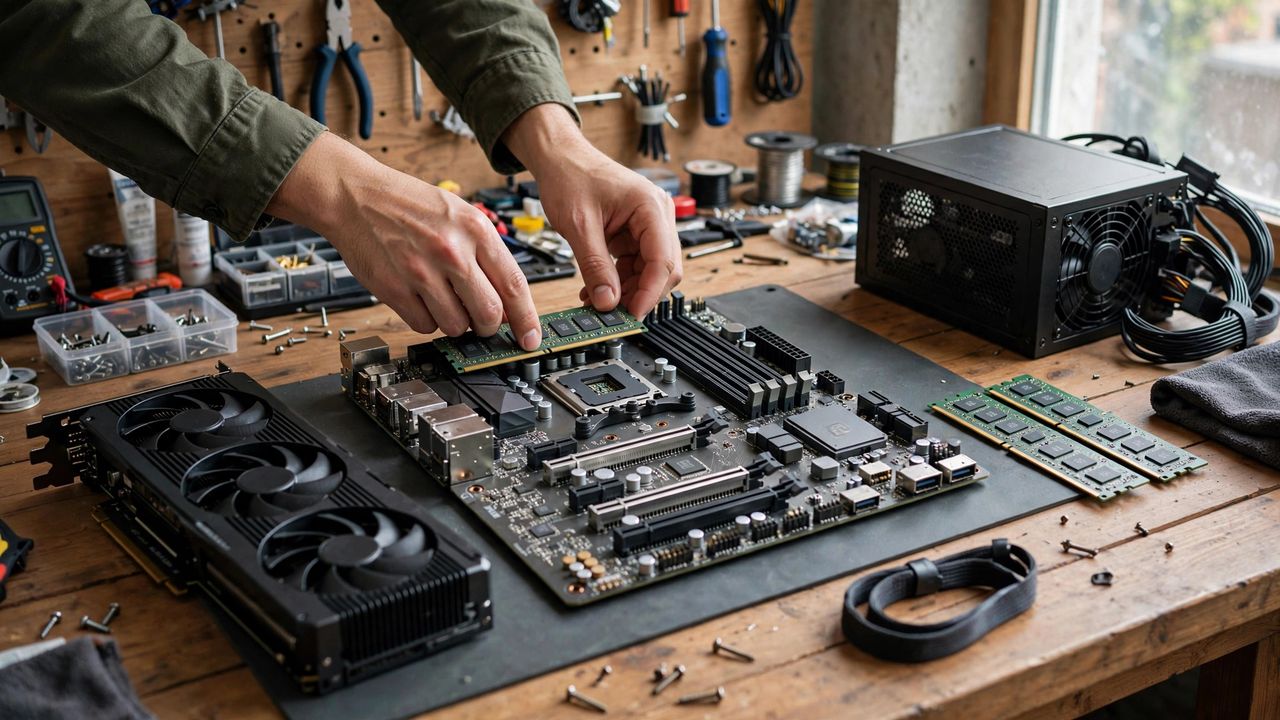
Building your own PC is not as hard as it looks — and in 2026 it is one of the best ways to get great performance without overspending. Parts are cheaper than prebuilt systems for the same specs, and you control every component. If you can follow instructions and handle parts carefully, you can build a PC in one afternoon. This guide covers what to buy and how to put it together.
Choose Your Core Parts
On a budget, spend the most on the CPU and GPU, since they decide how fast your PC feels. A mid-range processor with a modest graphics card beats a fancy CPU paired with a weak GPU for most people. Aim for 16 GB of RAM and a 500 GB or 1 TB NVMe SSD — that is the sweet spot for everyday speed, and SSDs make even old PCs feel new.
Never Skimp on the Power Supply
The power supply (PSU) is the one part beginners underestimate. A cheap, low-quality PSU can damage your whole system. Buy a PSU from a known brand with an 80+ Bronze rating or better, with about 100–150 watts of headroom above what your parts need. It is the cheapest insurance you will ever buy for your PC.
Check Compatibility Before You Buy
The CPU socket must match the motherboard, the RAM generation must match the motherboard too, and the GPU must physically fit inside the case. Use an online PC-builder tool that flags incompatible parts automatically — let the compatibility checker do the detective work instead of memorizing socket names. Double-check the motherboard's RAM slots and speed ratings.
Build in the Right Order
Build on a clean, static-free surface. Install the CPU, cooler, and RAM onto the motherboard first, mount the board in the case, then add the PSU, drives, and GPU. Connect power cables last. Common beginner mistakes: forgetting the motherboard standoffs, plugging the monitor into the motherboard instead of the GPU, and forcing the CPU — if a part resists, stop and check the orientation instead of pushing harder.
The takeaway: plan the parts list carefully, respect compatibility, and the build itself will be straightforward. Take your time on step one — the shopping list — and the afternoon build will go smoothly.