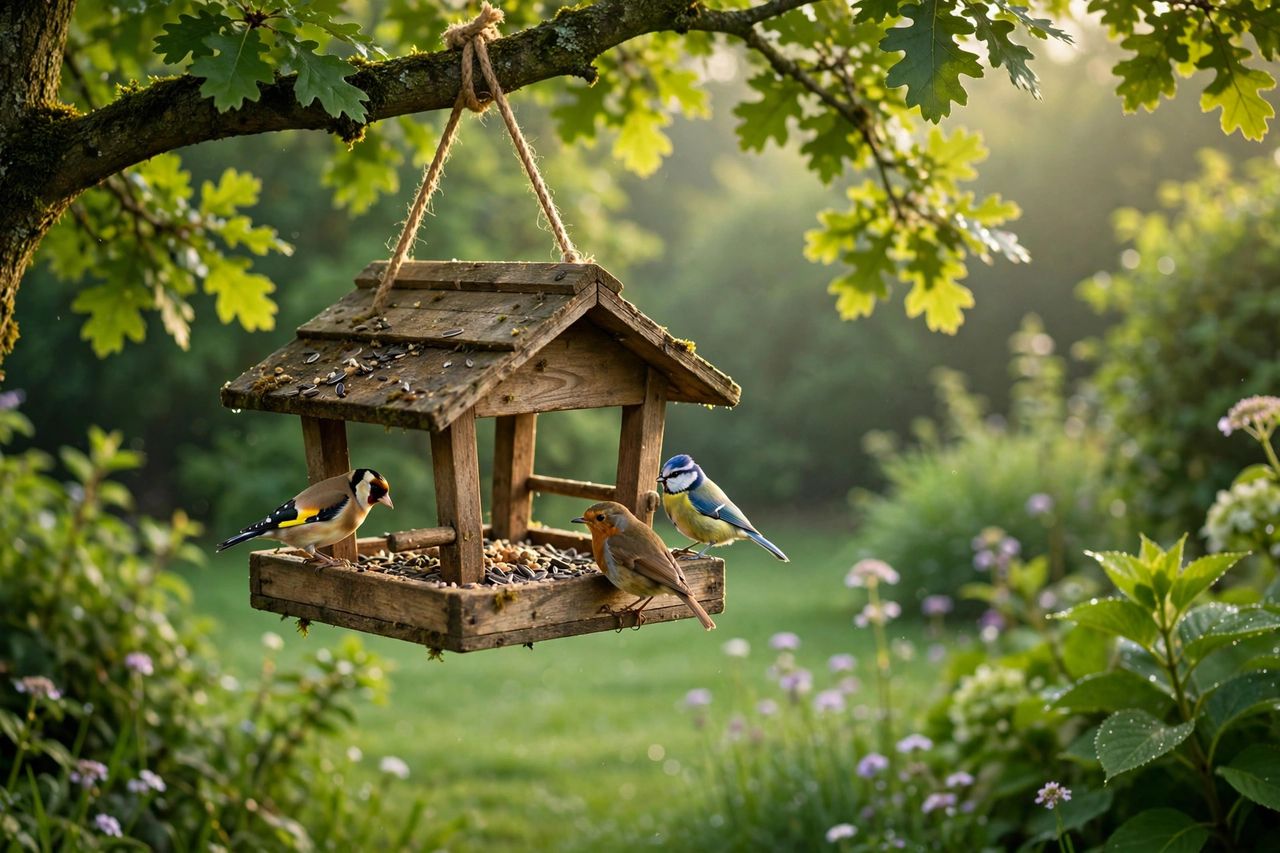
A bird feeder turns any yard, balcony, or window into a front-row seat for wildlife. But hanging one up is only half the job: the type of feeder, where you put it, and what you fill it with decide whether birds flock to it or fly right past. This guide covers everything you need to get it right in 2026.
Feeder Types and Which Birds They Attract
Tube feeders with small perches are favorites of finches, chickadees, and titmice. Hopper feeders — the little house-shaped boxes — attract cardinals, jays, and grosbeaks with their roomy trays. Platform or tray feeders welcome ground-feeding birds like doves and sparrows. Suet feeders, the wire cages filled with fat blocks, draw woodpeckers and nuthatches in cold months. Match the feeder to the birds you want to see.
Placement: The Safety Rules
Hang feeders either very close to windows (under 3 feet) or more than 30 feet away — the middle zone is where fatal window strikes happen. Keep feeders at least 10 feet from dense shrubs where cats can hide and ambush. A spot with morning sun and nearby trees for quick escape cover is ideal. Height matters less than shelter: most birds prefer feeding where they can see danger coming.
Seeds: What to Buy and What to Skip
Black-oil sunflower seed is the single best all-round choice — high in fat, thin shells, loved by the widest range of birds. Nyjer (thistle) seed is the ticket for goldfinches. Safflower appeals to cardinals while squirrels dislike it. Skip cheap mixes heavy on red milo and cracked corn: most songbirds kick those aside, and they rot into moldy waste under the feeder.
Cleaning: The Step Everyone Skips
Dirty feeders spread disease among birds. Scrub feeders with a 1:9 bleach solution every two weeks, rinse well, and let them dry completely before refilling. Rake up old hulls and droppings beneath the feeder regularly — damp, moldy seed piles are a health hazard. In wet weather, bring in any seed that gets soaked and replace it fresh.
Patience and Water
New feeders can take two to three weeks to be discovered, so don't give up early. Once birds find it, keep it filled consistently — an empty feeder sends them looking elsewhere. Add a shallow water dish or birdbath nearby: water attracts even more species than food, especially in summer. A simple dripper or mister makes the water sparkle and catches birds' attention from far away.
Start with one good tube or hopper feeder, quality sunflower seed, a safe spot, and clean habits — that's the whole formula. Within a month you'll recognize your regulars by sight and song, and your mornings will never be the same.